

hdpe geocells gravel grid
- Commodity name: hdpe geocells gravel grid
Brief Introduction to Geocells
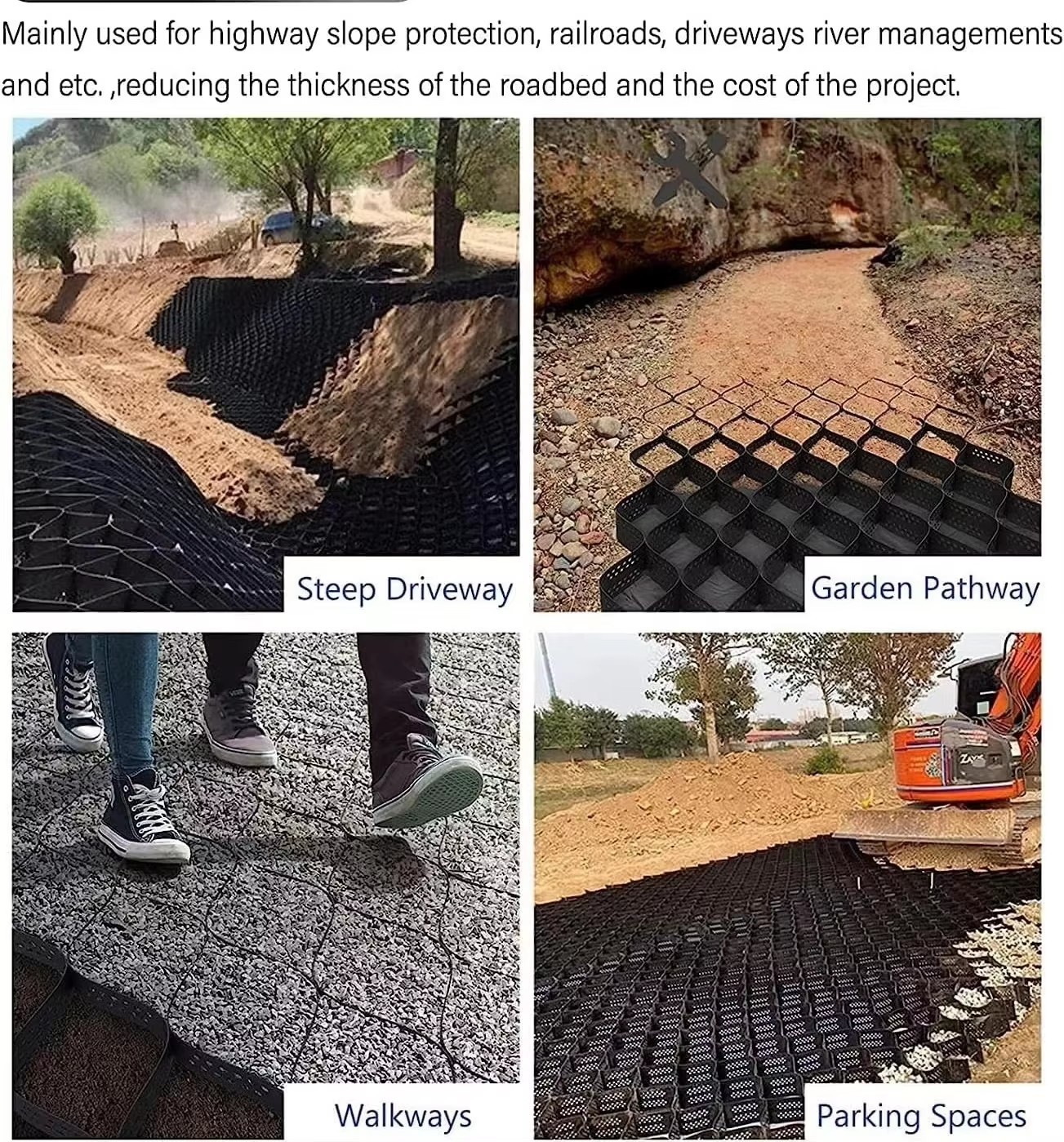
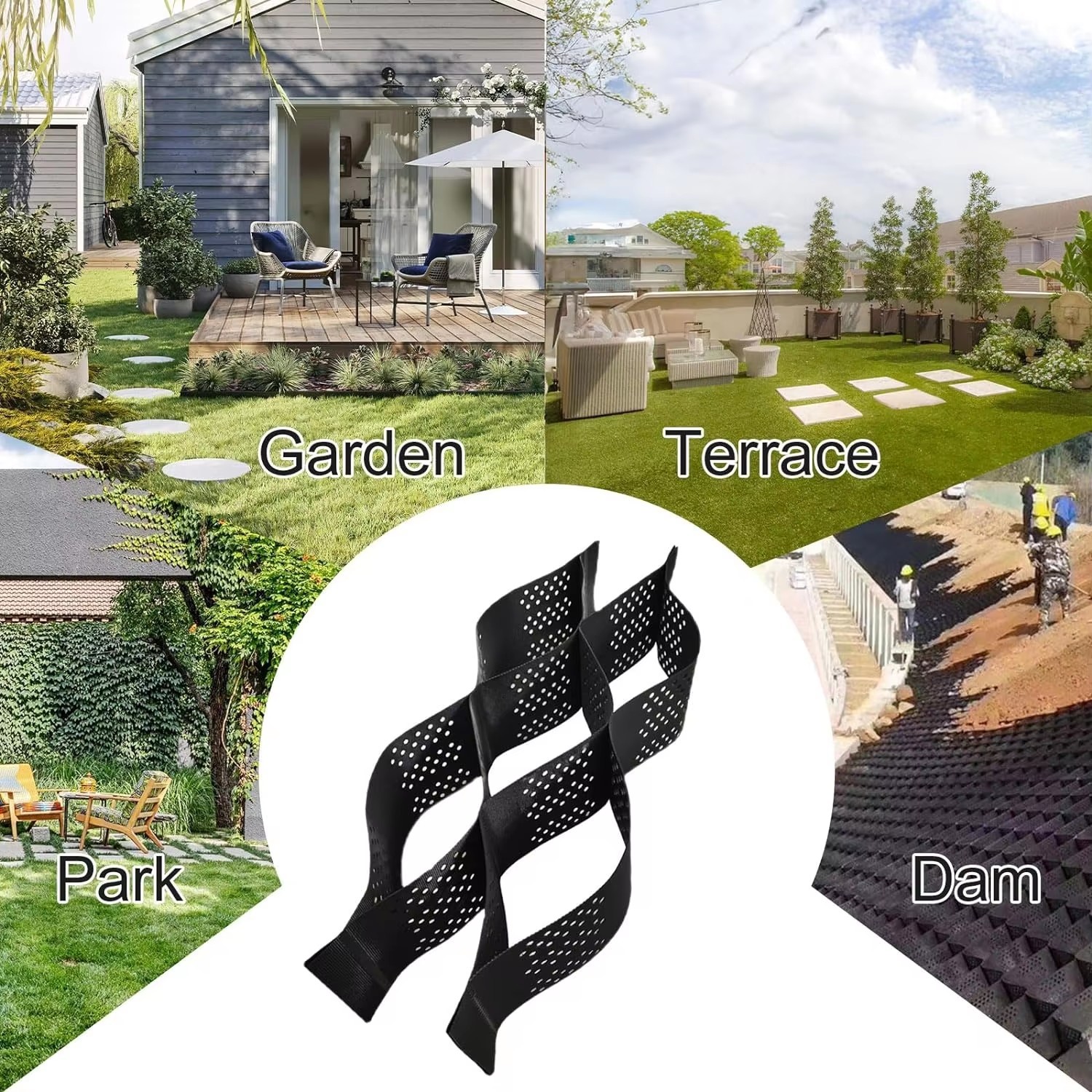
Geocells are three-dimensional, honeycomb-like structures made from durable polymer materials such as polyethylene or polypropylene. They are used in civil engineering for soil stabilization, slope protection, and erosion control. When expanded, geocells form a flexible grid that can be filled with soil, gravel, or concrete, providing enhanced load-bearing capacity and stability. Their key features include high strength, permeability, corrosion resistance, and ease of installation. Geocells are widely applied in road construction, embankment reinforcement, and environmental protection projects due to their cost-effectiveness and ability to improve project durability.
Brief Introduction to Geocell Specifications
Geocells are available in various specifications to suit different engineering needs. Common parameters include:
Material: Typically made from high-density polyethylene (HDPE) or polypropylene (PP).
Cell Size: Ranges from 100 mm to 300 mm in diameter, depending on the application.
Cell Depth: Usually between 50 mm and 200 mm, adjustable based on project requirements.
Sheet Size: Standard sheets are often 4-8 meters in length and 2-4 meters in width.
Thickness: Wall thickness generally ranges from 1.0 mm to 1.5 mm, ensuring durability and flexibility.
Color: Commonly black or green, depending on the material and application.
These specifications can be customized to meet specific project demands, ensuring optimal performance in soil stabilization, slope protection, and other civil engineering applications.
Product Introduction
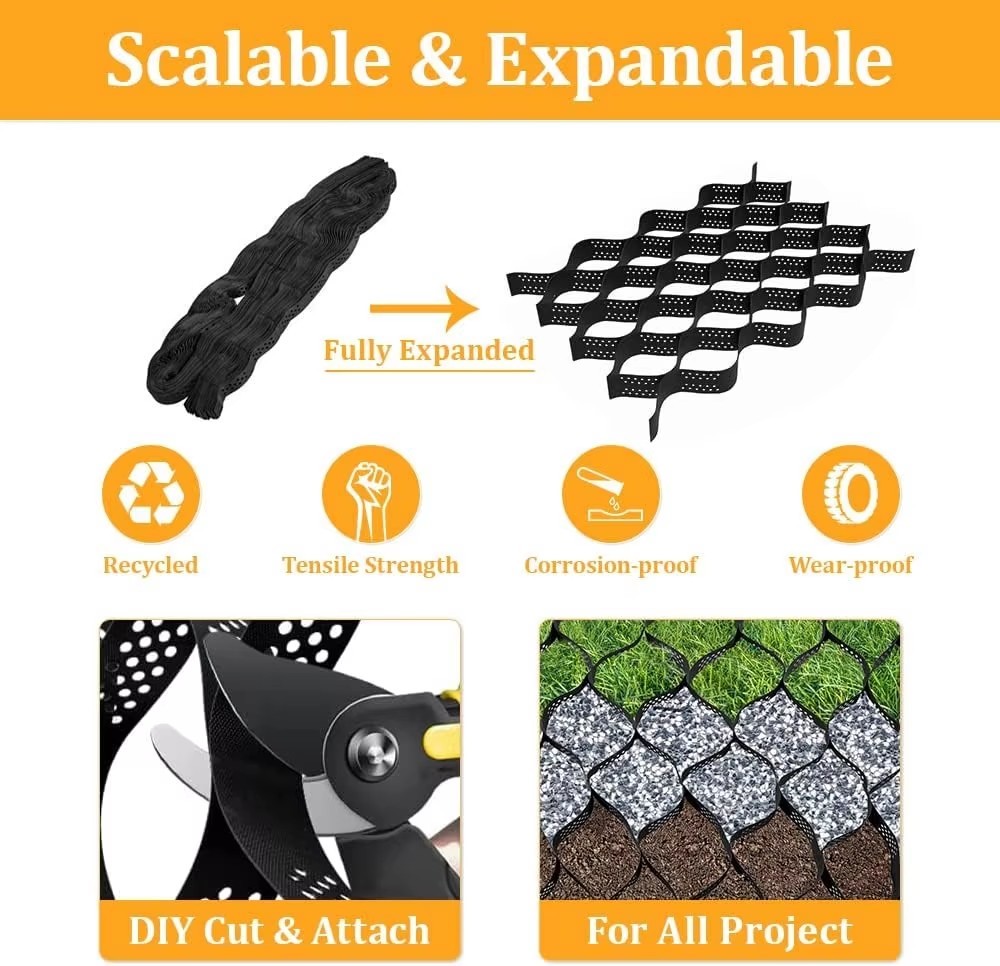
Geocell is a three-dimensional network structure material made of polyethylene plastic sheets welded by high-strength ultrasonic waves. It uses local materials, sand, crushed stones, and soil as filling materials to form a composite material with a universal structure, achieving high bearing capacity. It can form a stable roadbed, and also plant grass on it, greening and stabilizing the slope.
|
Product Name |
Geocell |
|
Product Material |
HDPE |
|
Product Height |
50/75/100/150/200mm |
|
Welding Distance |
330/356/400/445/450/500/545/600/660/712/800/900/1000 |
|
Product Color |
Black, Green, Customized |

Product Specifications
|
Serial Number |
Test items |
Unit |
Geocell made of PP material |
Geocell made of PE material |
|
|
1 |
appearance |
|
The cells should be flat, without bubbles or grooves |
||
|
2 |
Tensile yield strength of cell sheets |
MPa |
≥23.0 |
≥20.0 |
|
|
3 |
Tensile strength of welded joints |
N/cm |
≥100 |
≥100 |
|
|
4 |
Tensile strength at the connection between cell groups |
Format Sheet Edge |
N/cm |
≥200 |
≥200 |
|
5 |
Format slice middle |
N/cm |
≥120 |
≥120 |
|
Product Features
1, flexible, transport can be folded, the construction can be stretched into a network, filled with soil, gravel.
concrete and other loose materials, to form a strong lateral limit and large stifness of the structure.
2, light material, wear resistance, chemical stability, light oxygen aging resistance, acid and alkali resistance.
suitable for different soil and desert soil conditions.
3, high side limit and anti-slip, anti-deformation, effectively enhance the bearing capacity of the roadbed anddisperse the load.
4, change the geocell height, welding distance and other geometric dimensions to meet diferent engineeringneeds.
5,flexible, small transport volume, convenient connection, fast construction speed.

Packing Details
1. HDPE geocells are packaged on pallets and secured with cable ties and plastic wrap. or as your requested;
Warning:Keeping away from fire and high temperatures.

Production workshop

Quality Inspection

Looking forward to working with you
Sixteen foreign trade key account managers with more than ten years of engineering experience will promptly respond to any of your engineering questions. What are you waiting for? Let's get started.

Get A Quote
Note: Within a few minutes of filling out the form, you will receive the most timely and effective response.
Xinying·Strength for the Earth
Home
About Us
Contact Us
Email:xinyingcailiao@gmail.com
WhatsApp:+86 19953899723
Tel:+86 19953899723
Copyright ©